
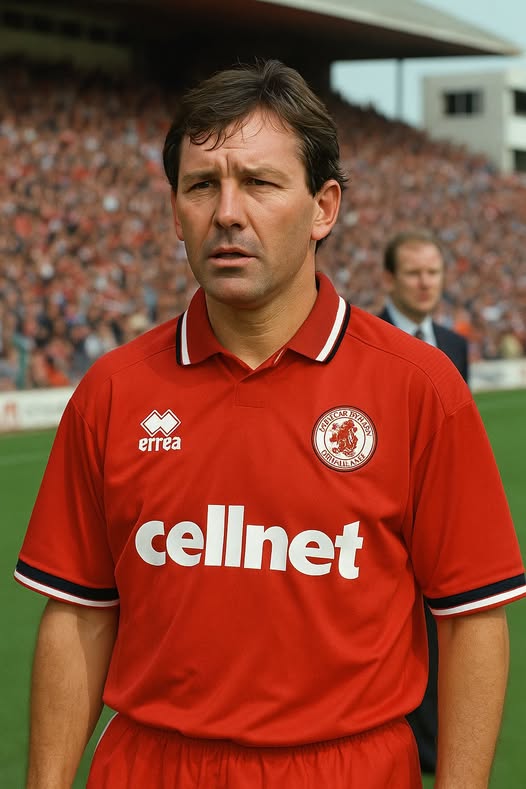
The Bryan Robson Years at Middlesbrough: Ambition, Drama, and Lasting Legacy
When Bryan Robson walked into the Riverside Stadium in 1994, Middlesbrough Football Club was at a crossroads. The appointment of England’s longest-serving captain as player-manager was a bold move by chairman Steve Gibson, who promised to match Robson’s ambition with financial backing and a vision of turning the Teesside club into a Premier League force. Over the next seven years, Robson’s tenure would deliver glamour, heartbreak, and some of the most unforgettable chapters in the club’s history.
—
A New Era Begins (1994–1995)
Robson’s arrival coincided with Boro’s move to the brand-new Riverside Stadium. The optimism was electric: here was an England legend, combining managerial promise with playing pedigree, at the helm of a club that had just built one of the finest stadiums in the country. In his first season, he guided Middlesbrough to promotion from the First Division, securing their place in the Premier League for the 1995–96 campaign.
—
The Big Names Roll In
Backed by Gibson’s ambition, Robson tapped into the global transfer market in a way few provincial clubs dared to dream. Juninho Paulista, the diminutive Brazilian playmaker, captured the imagination of the Teesside faithful and became a cult hero. Other marquee signings followed: Fabrizio Ravanelli, fresh from winning the Champions League with Juventus, and Brazilian midfield enforcer Emerson.
For a time, Middlesbrough became the most glamorous destination outside of the traditional English elite. The club’s style of play was adventurous, at times cavalier, with the Riverside buzzing to the rhythm of its South American heartbeat.
—
The Rollercoaster of 1996–1997
The 1996–97 season remains one of the most dramatic in English football. Boro reached two cup finals — the League Cup and FA Cup — but lost both (to Leicester City and Chelsea respectively). At the same time, the club endured relegation after a three-point deduction for failing to fulfil a fixture against Blackburn Rovers when a flu outbreak left Robson unable to field a team.
It was cruel fate: without the deduction, Boro would have survived. Instead, a season that promised silverware ended in despair, though Juninho’s tears after relegation cemented his bond with the fans forever.
—
Redemption and Return (1997–1998)
Robson stayed, determined to restore Middlesbrough’s top-flight status. True to his word, Boro bounced back immediately, finishing second in the First Division and returning to the Premier League at the first attempt. The promotion underlined Robson’s resilience and Gibson’s loyalty to his manager, who remained a symbol of the club’s ambition despite the setbacks.
—
The Late Years and Decline (1999–2001)
As the new millennium dawned, the initial spark began to fade. The glamour signings dried up, results stagnated, and the style of play became more pragmatic. While Boro maintained their Premier League status, the club failed to push into the top half with consistency. Pressure grew, and by 2001, after seven years in charge, Robson’s reign came to an end. Steve McClaren was appointed as his successor, tasked with building on the foundations Robson had laid.
—
The Robson Legacy
Despite the frustrations, Bryan Robson’s years at Middlesbrough were transformative. He gave the club:
Global recognition: Juninho and Ravanelli brought international attention.
Two cup finals: even if both ended in heartbreak, they established Boro as serious competitors.
Resilience: promotion in 1998 proved the club had steel as well as flair.
A platform for the future: the groundwork he laid eventually bore fruit when Middlesbrough lifted the League Cup in 2004 under McClaren.
For Teessiders, the Robson era is remembered with both nostalgia and bittersweetness: a period when Middlesbrough dared to dream bigger than ever before, tasted both glory and despair, and carved a lasting place in English football’s story.
—
TDB Verdict: Bryan Robson didn’t just manage Middlesbrough — he redefined what the club could be. His reign may have fallen short of trophies, but it succeeded in giving Boro fans memories that will last a lifetime.