
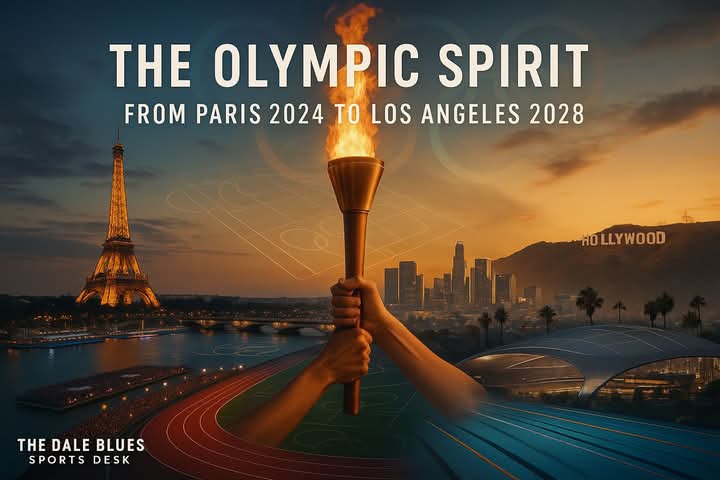
The Spectacle of the Olympic Games — Reviewing Paris 2024 and Previewing Los Angeles 2028
Paris 2024 — A Grand Sporting Festival in France
The summer of sport reached its full crescendo in the French capital with the 2024 Summer Olympics in Paris. As ever, it was a spectacle of global humanity, elite performance, drama, records and deep emotion. Here’s how it unfolded — the highs, the headlines and the enduring legacy.
Host city & venues
Paris offered a richly layered backdrop — both the Seine-bank costume of the Opening Ceremony and the repurposed arenas underlined the ambition.
For swimming, the Paris La Défense Arena was converted into a pool arena.
The scope and scale of the Games reflected the city’s blending of heritage and modernity.
Medal table & national outcomes
The United States topped the table with 40 golds and 126 medals overall.
China matched the U.S. with 40 gold medals, though fewer silvers, giving the U.S. the edge.
For the host and other nations, there were memorable breakthroughs and stories.Key Athletes & Moments
Keely Hodgkinson of Great Britain charged to Olympic gold in the women’s 800m — a defining moment for the young athlete and Team GB.
Sifan Hassan made headlines: bronze in the 5,000m, bronze in the 10,000m, then gold in the marathon – becoming the first woman ever to win Olympic gold in the marathon, 5,000m, and 10,000m.
In the pool: the men’s 4×100 freestyle relay helped the USA reclaim a gold that had been elusive. Also notable was the Chinese swimmer Pan Zhanle, who set a world record in the men’s 100 m freestyle (46.40s) — the largest margin of victory since 1928.
There were dramatic contests — for example the U.S. women’s basketball final finished 67-66 in a nail-biter.
For Great Britain, the haul of 65 medals (14 golds, 22 silvers, 29 bronzes) marked one of their best ever Olympics.
Big Themes & Reflections
The Games reaffirmed that the Olympics are still about more than raw medal tallies: stories of resilience, national and personal pride, emerging stars, and the unexpected shine through.
Paris 2024 also underscored features of modern Olympic staging: adaptive venues, urban integration, and global media reach.
At the same time, there were criticisms: some visitor experience elements didn’t quite live up to expectation.
One interesting reflection: how the host city’s legacy and venues will be reused (or not) remains an ongoing conversation in Olympic discourse. (See also the “Oxford Olympics Study” for cost-overrun concerns.)
In short: Paris 2024 delivered — a vibrant, multifaceted festival of sport, culture and global participation. But as ever, the perils and pressures of Olympic hosting also lurk in the background.
Previewing Los Angeles 2028 — The Next Grand Chapter
Work is now well underway for the 2028 Summer Olympics in Los Angeles (LA28). Here’s a deeper look at what’s anticipated: the venue plan, what to watch for, and the athletes and nations who might make headlines.
Host city & venue strategy
Los Angeles will host the Games from 14–30 July 2028.
One of the standout features: LA28 will not build new permanent venues — instead it will utilise existing stadiums and facilities across the greater Los Angeles region.
Some major venues: e.g. the historic Los Angeles Memorial Coliseum, which will host major ceremonies, and other arenas repurposed for competition.
The vision: blend entertainment, sport and “Hollywood” cultural dynamism with Olympic heritage.
What to look out for (sports, innovation & surprises)
New or returning sports: The LA28 programme will feature 351 medal events, 22 more than Paris 2024.
Among the newest additions: sports like flag football, cricket (returning to the Olympic programme after many years), squash.
Multi-venue spread: For example, baseball will be played at Dodger Stadium, surfing at Trestles Beach, cricket at the Pomona Fairgrounds outside LA.
Sustainability & legacy: The reuse of venues is intended to reduce cost and environmental impact — a major theme for LA28.
Athletes & nations to watch
With four years to go (and counting), several names and nations already loom large:
Established stars now riding high may either defend or step aside, making room for the next generation.
Young breakout talents from Paris 2024 will likely be at their peak in LA28 — so look at the medalists from Paris who are still early in their careers.
The USA (as host nation) will aim for a dominant performance, but strong challengers from China, Japan, European nations and others will contest strongly.
New sports entries (cricket, flag football) open pathways for countries that previously had little Olympic presence in those disciplines — so keep an eye on non-traditional medalists emerging.
If we look to specific disciplines: athletics, swimming, and team sports always hold promise of big narratives and athlete transitions (new champions, generational hand-offs).
Broader Considerations & Risks
Weather and environment: Hosting a major summer event in Southern California invites considerations of heat, air quality (wildfire smoke risk) and infrastructure resilience. Media reports have flagged concern about wildfires approaching key venue areas.
Cost & logistic pressures: Although LA28 is leaner in building new venues, mega-events always carry risks of overrun and legacy burden. The “Oxford Olympics Study” suggests cost and cost-overrun remain major issues.
The “host country effect”: The USA will have home-advantage, but with it comes heightened expectation, scrutiny and pressure — story-rich territory for journalists, analysts and fans alike.
Final Thoughts: From Paris to LA — Continuity and Change
The passage from Paris 2024 to Los Angeles 2028 captures the dual nature of the Olympic Games: a celebration of universal sport, and a forecast of shifting contexts — environmental, technological, socio-economic.
Paris delivered compelling drama, superstar moments and a strong global narrative.
LA28 promises spectacle with a twist: familiar venues, larger scale (in some respects), new sports, and a host city more geared to entertainment and media integration than any previous Games.
For fans of sports journalism (such as the readership of The Dale Blues Sports Desk), the storyline is rich: athlete arcs, host-city dynamics, shifting medal landscapes, and the intersection of sport, culture and geopolitics.
As we count down the years, we’ll be watching: who emerges in the next Olympic cycle, how nations prepare and strategise, which venues become iconic, and whether the Games remain the sprawling, uplifting global festival they have always aimed to be.