
Children Deserve Heroes, Not Influencers
By Adam Bruckshaw-Iovaine
Editor-in-Chief, The Dale Blues
International Independent Voice in Football & Society
Introduction: The Age of Noise
We live in an age where attention has become currency, and character has become collateral damage. The loudest voice wins, the most exaggerated version of the truth trends, and the young — the very audience we should be protecting — are being taught that to be seen is to matter.
The problem is not technology itself. The problem is that we have surrendered our definition of worth to algorithms designed for addiction. Children and teenagers now grow up inside a digital carnival where popularity and principle have switched places. And when the noise becomes the message, the message becomes meaningless.
Our children deserve better than this. They deserve heroes, not influencers.
1. The Mirage of Influence
Social media has achieved something extraordinary — it has made fame feel democratic. Anyone, at any time, can broadcast themselves to the world. Yet in that process, the value of credibility has collapsed.
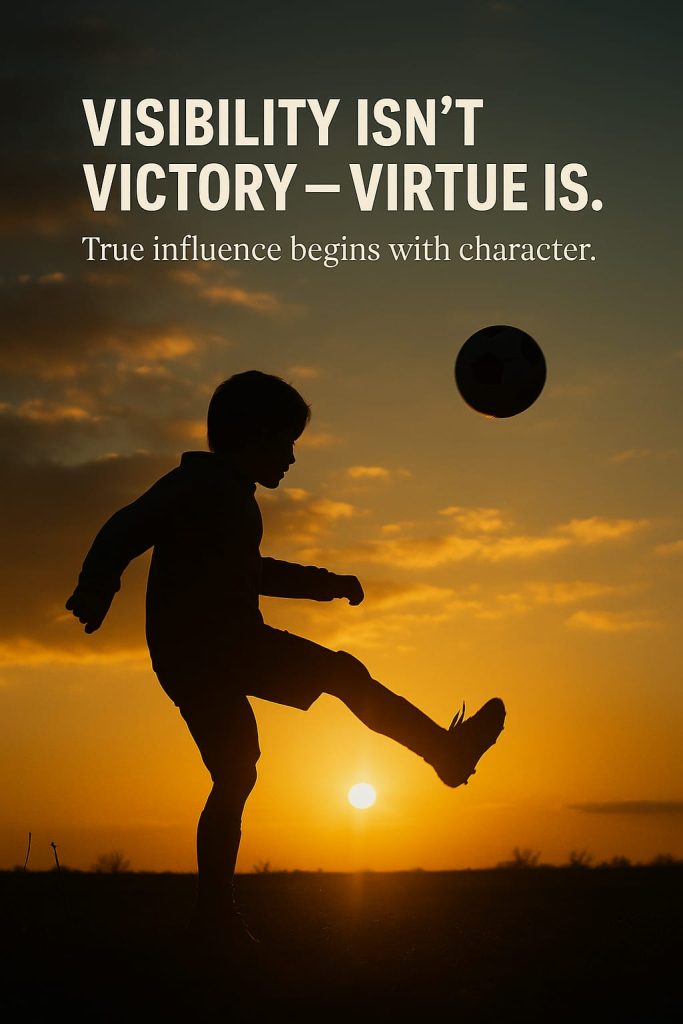
Influencers are rewarded not for truth or insight, but for engagement. Outrage travels faster than integrity; vanity gets more clicks than virtue. A generation is growing up learning that self-promotion is power and that empathy is weakness.
The tragedy is that children imitate what they see before they understand what it means. When the models before them are shallow, transactional, or manipulative, they internalise a lie — that visibility is victory.
2. The Lost Language of Heroism
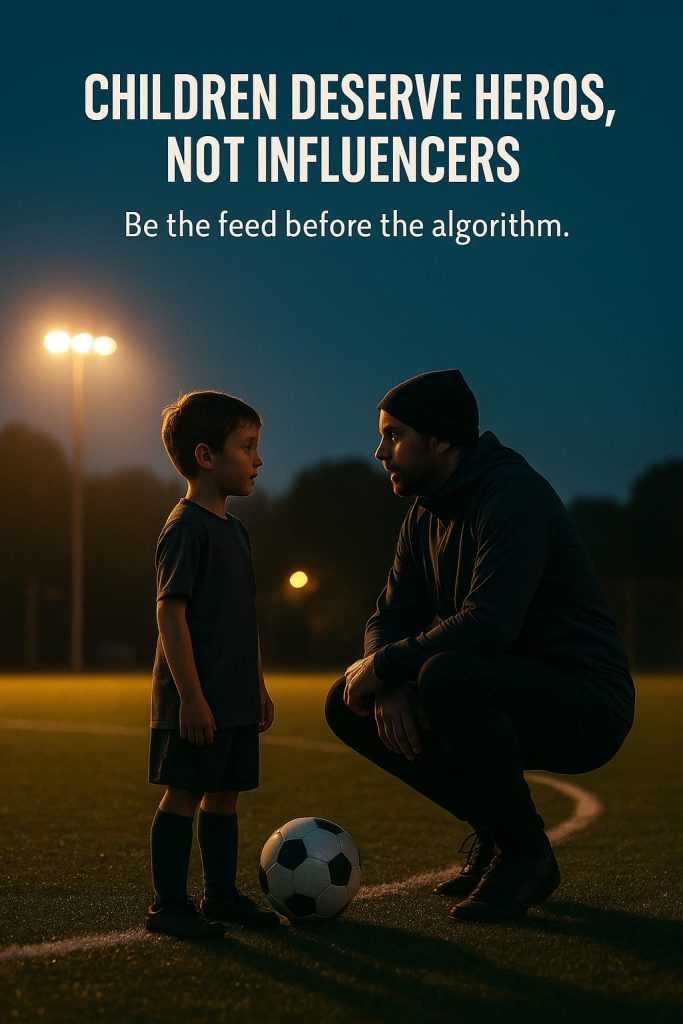
There was a time when children’s heroes were people who did things — people who built, taught, healed, led, and sacrificed. The firefighter, the teacher, the football coach, the medic, the soldier, the neighbour who stood up when it counted. These were not celebrities. They were examples.
Heroism was once about service, humility, and courage — not lifestyle sponsorships or manufactured authenticity.The heroic were those who gave something back, not those who took attention for a living.
We must rediscover that language. To be a hero in the modern world is not to escape hardship but to endure it with grace. It is to be strong without arrogance, humble without invisibility, and good without needing applause.
3. The Classroom, the Touchline, and the Field
Sport and education remain two of the last places where real heroism still breathes. A good teacher or coach can change the entire trajectory of a young life — not because they trend, but because they teach through example.
Football, in particular, has always carried moral weight. When a child learns to pass rather than show off, to take a tackle and rise again, or to celebrate a teammate’s goal as much as their own, they are learning ethics in motion.
There are still figures within football who represent this balance between visibility and virtue. Gareth Southgate, for example, has shown that quiet strength can lead as effectively as noise. Marcus Rashford proved that fame, when used correctly, can feed not ego but children.The point is not to worship individuals, but to reclaim football — and sport in general — as moral architecture.
When we teach sport properly, we teach life.
4. Technology as Tool, Not Tyrant
To guide the next generation, we must not demonise technology — that only deepens the divide. Instead, we must teach children how to engage critically and compassionately.
Social media, when used creatively, can amplify kindness, spread learning, and connect communities across continents. But the line between creation and consumption must be drawn clearly.
Every child has a right to explore, express, and connect online — but that right carries a duty: to think, respect, and protect themselves and others.We cannot switch off the digital world, but we can reprogram our approach to it.
Influence, in its best form, is simply leadership shared digitally. Let us reclaim the word before it loses all meaning.
5. Be the Feed Before the Algorithm
This generation’s crisis is not the screen — it is the silence of adults. Too many of us have outsourced mentorship to media. We assume someone else is shaping the moral compass of our children when, in truth, the compass is spinning.
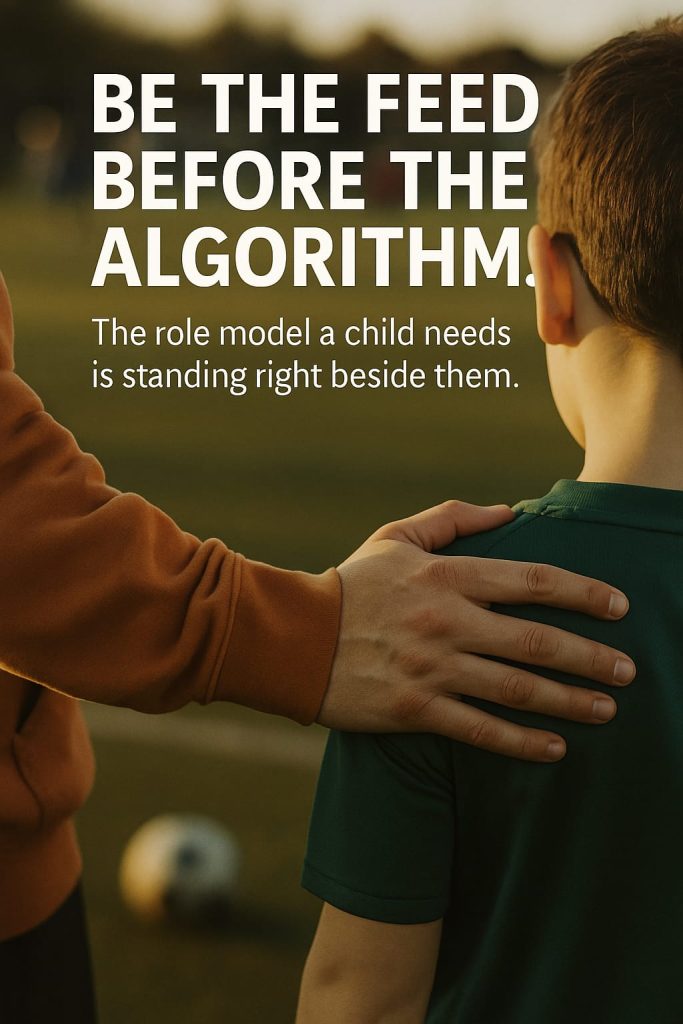
Parents, teachers, coaches — you are the algorithm that matters.You are the feed that cannot be bought or sponsored.
Every act of patience, every lesson of discipline, every word of encouragement is a data point that lasts a lifetime.
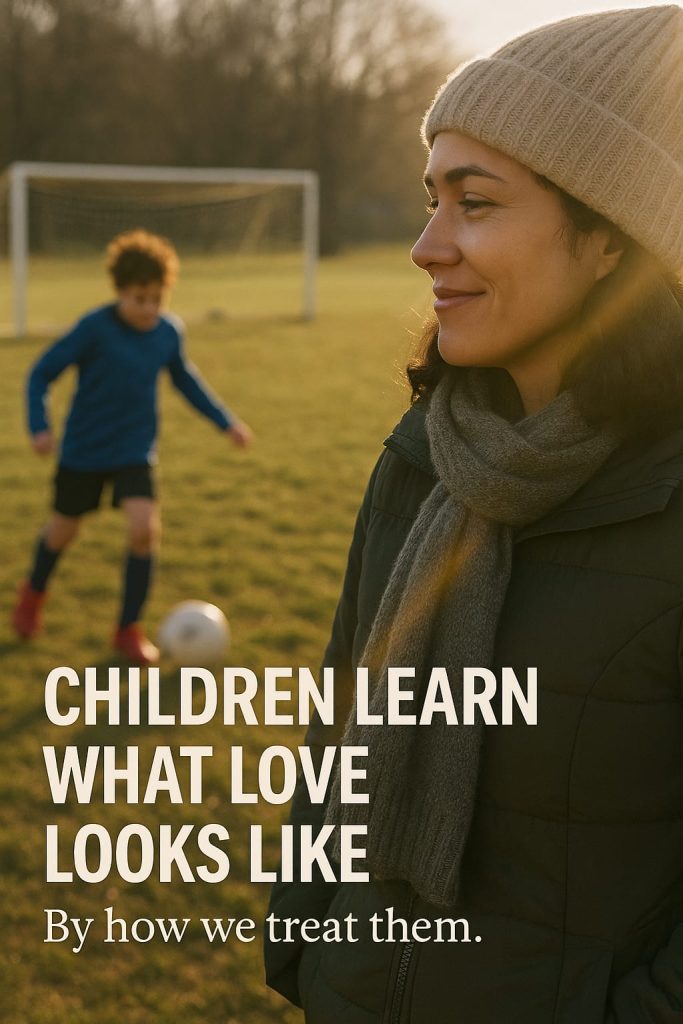
Children learn what love looks like by how we treat them — and what leadership feels like by how we guide them.
Conclusion: A Call to the Real Influencers
We cannot ask our children to believe in decency if we do not show them where to find it.
The next generation will not be saved by filters or followers, but by examples.If we want a world led by courage and compassion, we must produce leaders who embody both — on the touchline, in the classroom, in every home.
Children deserve heroes who lift others, not those who lift themselves.They deserve truth that endures longer than the trend.And they deserve adults brave enough to remind them that character — not content — is what makes a person worth remembering.