
The Dale Blues – Special Report
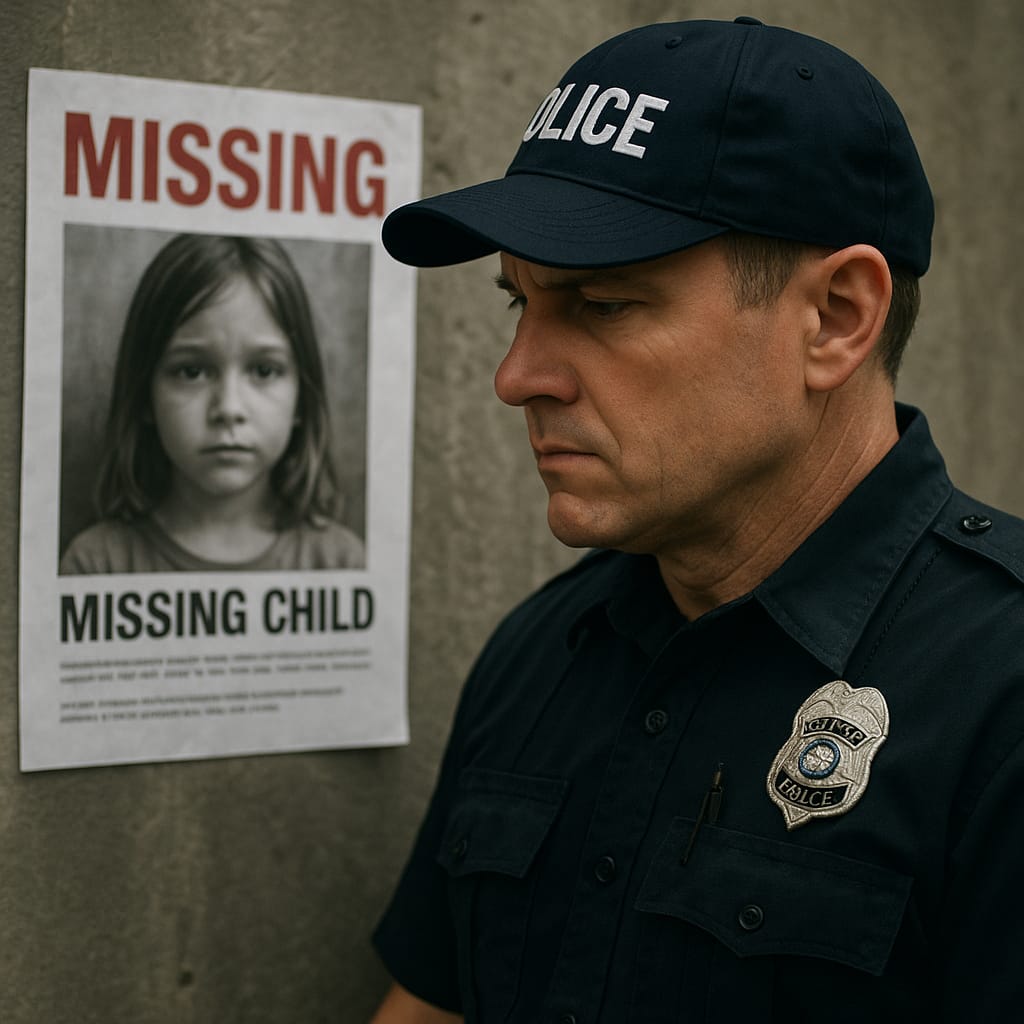
Why the Quiet Work of Johnston’s Police Matters in America’s Fight for Missing Children
By M. B. Shaw
When Americans talk about policing, they often jump straight to big-city headlines, TV dramas, or the latest viral controversy. What they rarely see is the steady, relentless work taking place in towns like Johnston, Iowa and Johnston, Rhode Island – work that may never make national news, but which is part of a life-and-death struggle to protect missing and exploited children.
Behind the uniforms, the social media posts and the community events, local officers in both Johnstons are plugged into a national system that tries, every single day, to find children who have vanished and to disrupt those who would prey on them.
This isn’t soft-focus PR. It’s hard, often upsetting work. And the scale of the problem should make every citizen sit up.
The Scale of a National Emergency
The numbers alone are sobering.
In 2024, there were 349,557 reports of missing persons involving youth entered into the FBI’s National Crime Information Center (NCIC) – part of more than 533,000 total missing-person reports that year across all ages.
The National Center for Missing & Exploited Children (NCMEC) assisted law enforcement with 29,568 missing children cases in 2024, managing to help recover around 91% of them – an achievement, but also a stark reminder of how many cases are still happening in the first place.
Of those missing children NCMEC was involved with, about 1 in 7 were likely victims of child sex trafficking.
NCMEC’s CyberTipline – the clearinghouse for reports of online child sexual exploitation – received 20.5 million reports in 2024, representing an estimated 29.2 million separate incidents of child sexual exploitation when bundled reports are unpacked.
Those figures are not statistics from a distant dictatorship or a failed state. They are from the United States of America.
Add to that the rise of AI-generated abuse imagery, deepfake child sexual abuse content, and exploding levels of online enticement and sextortion, and the picture becomes even darker
It is into this national context that local departments like the Johnston Police in Iowa and Rhode Island quietly step each day.
Johnston, Iowa: Small City, Serious Responsibilities
On paper, the Johnston Police Department in Iowa is a municipal force serving a fast-growing Des Moines-area community. Its official remit is to enforce laws, maintain peace, and meet “community expectations” while proactively disrupting crime and disorder.
In practice, that means being prepared for the worst possible phone call any shift can bring: a child who hasn’t come home.
Johnston officers have historically trained annually on missing-child procedures, recognising that minutes matter when a child is unaccounted for. When two very young boys went missing in 2015, Johnston Police, working with the Polk County Sheriff’s Office, launched a code red alert to mobilise the community quickly – a reminder that in such cases, good policing and public cooperation must go hand-in-hand.
Behind the scenes, departments like Johnston IA are plugged into:
The NCIC database, to enter and track missing children.
NCMEC resources, including posters, case support, and analytical help.
State and federal partners, including state investigative divisions and the FBI.
The public might only see an Amber Alert on their phone or a patrol car outside a park. They don’t see the hours of coordination, paperwork, and follow-up that sit behind each alert, nor the emotional weight of dealing with terrified families and, sometimes, heartbreaking outcomes.
Johnston, Rhode Island: A Century of Service in a Changing Age
On the East Coast, the Johnston Police Department in Rhode Island has been serving its community for more than a century, evolving into “one of the finest law enforcement organizations” in the state through investment in training, technology and professional development.
Like their counterparts in Iowa, Johnston RI officers are not operating in a vacuum. They are part of a national web of:
Internet Crimes Against Children (ICAC) task forces
FBI field offices and special units focused on child exploitation
Homeland Security Investigations (HSI) team
NCMEC’s Missing Kids Readiness and other training programmes, which set national standards for responding to calls about missing and exploited children.
When a tip first surfaces – perhaps a suspicious online contact, a child who fails to return from school, or a social media image that looks wrong – it is often a local officer who receives the call.
From there, the case can rapidly escalate into a multi-jurisdictional operation involving digital forensics, international data requests, covert surveillance, or undercover work. The Johnston patrol officer or detective is suddenly an essential cog in a national machine trying to find a missing teenager or identify a child in an abuse video as quickly as possible.
Why “Special Forces” and Specialist Agencies Are Essential
The scale and complexity of modern child exploitation is such that ordinary patrol work is no longer enough. Local departments – including the Johnstons – increasingly rely on:
Federal “special forces” equivalents: FBI Child Exploitation and Human Trafficking Task Forces, HSI child exploitation units, and specialised prosecutors who can chase offenders across state and even national borders.
Dedicated child-protection agencies: NCMEC, state-level child services, and NGOs that provide intelligence, analytical support and aftercare for victims.
Technical specialists: digital forensics experts able to trace IP addresses, decrypt devices, and recover ‘deleted’ images or chat logs.
Psychological and social-work teams: to support traumatised children and families during and after investigations.
The message is simple: a missing child case is rarely “just local” anymore. A disappearance in Iowa might link to an online predator three states away. A problematic chat in Rhode Island might tie in with a transnational group under federal investigation.
Local police departments act as the front door to these specialist networks. Without a vigilant beat cop or a switched-on dispatcher taking a parent seriously, the wider system never gets activated.
Preventing Children Going Missing in the First Place
While rapid response is vital, prevention has to be the long-term goal.
Departments such as Johnston IA and Johnston RI increasingly see themselves not only as crime fighters but as community educators – turning up in schools, youth clubs, and community meetings to talk about:
Online safety, sextortion, and grooming tactics.
The importance of telling a trusted adult where you’re going and who you’re with.
How parents can spot signs of distress, manipulation, or secretive online behaviour.
At the national level, new tools – from social media Amber Alerts to AI-assisted image analysis – are being deployed to find missing kids faster and to spot abuse material more efficiently.
But even the best technology is useless without human eyes and ears in communities. It still comes back to local officers, local schools, and local families.
A Call for Realistic Support – Not Blind Hero Worship
This isn’t a saintly gloss on policing. Like every department in America, the two Johnstons will have made mistakes, faced complaints and encountered controversy. Good oversight and accountability are essential in any democracy.
But amid the noise of national debate about policing, it would be a grave injustice – and a dangerous one – to ignore the quiet, ongoing, essential work being done every day in places like Johnston, Iowa and Johnston, Rhode Island to keep children safe.
When we talk about “backing law enforcement” or “holding law enforcement to account”, the conversation must include this reality:
Hundreds of thousands of missing youth reports each year.
Tens of thousands of missing-child cases supported by national partners.
Tens of millions of suspected exploitation incidents reported online.
And local departments, often understaffed and underpaid, acting as the first responders and long-term partners for families in crisis.
If we truly care about preventing children and young people from going missing during the course of childhood, we must:
Support specialist child-protection units and task forces.
Fund training and technology for local departments like the Johnstons.
Ensure that agencies like NCMEC, the FBI and ICAC task forces are fully resourced.
Build a culture where parents, schools and children themselves feel able to speak up early, before a “close call” becomes a missing-person report.
The fight for America’s children is being waged quietly in places you’ll rarely see on a TV drama. That includes two towns called Johnston – one in Iowa, one in Rhode Island – whose officers, like thousands of others across the country, go to work each day knowing that one phone call could change a family’s life forever.
They deserve scrutiny. They also deserve our attention, our understanding – and, when they get it right for a child in danger, our thanks.