
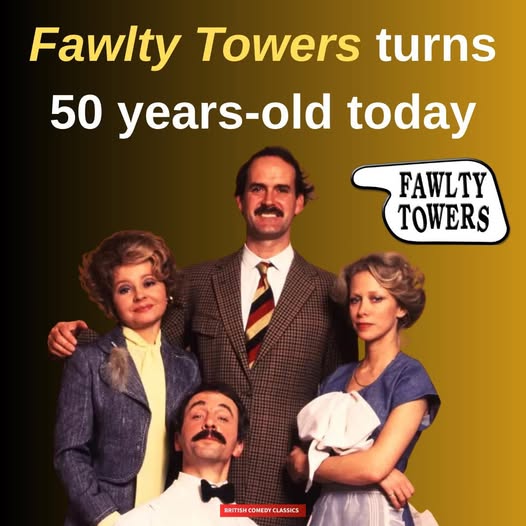
Sit-Com Parade: Fawlty Towers and the Comedy Crown
When British humour is held aloft on the world stage, one name always gets a knowing nod: Fawlty Towers. John Cleese’s manic hotelier and the perfectly cast ensemble created an icon of laughter that remains, to this day, untouchable. Only twelve episodes were ever made—two sparkling series that left viewers begging for more. And therein lies the genius: leaving the table while the wine is still sweet, ensuring Fawlty Towers will never be accused of growing stale. It is arguably Britain’s smartest sitcom concept—brevity with brilliance.
In comparison, other much-loved sitcoms ran on longer fumes. Only Fools and Horses stretched through decades, reaching magnificent heights—Del Boy falling through the bar will forever be replayed—but also taking risks that sometimes diluted its sharpest moments. Dad’s Army, beloved in its own right, spoke to a different age, its gentle wartime ribbing now a touch dated to younger eyes. Are You Being Served? and ’Allo ’Allo! once pulled millions, but their innuendo-heavy scripts and dated stereotypes struggle in modern daylight.
Fast forward, and Britain has given us The Office—Ricky Gervais’s awkward masterpiece—which, like Fawlty Towers, knew when to bow out, preserving its legend. Peep Show turned inner monologues into cult genius, while Derry Girls proved that modern wit, rooted in place and history, could resonate just as powerfully as the classics.
Yet, none have quite matched the global affection carried by Basil Fawlty’s flustered rage, Sybil’s razor-sharp retorts, Manuel’s bewildered charm, and Polly’s quiet intelligence. The fact that the show never overstayed its welcome is why it endures: a timeless reminder that less really can be more.
In the sit-com parade of British history, Fawlty Towers remains the Grand Marshal—chaotic, glorious, and unforgettable.