
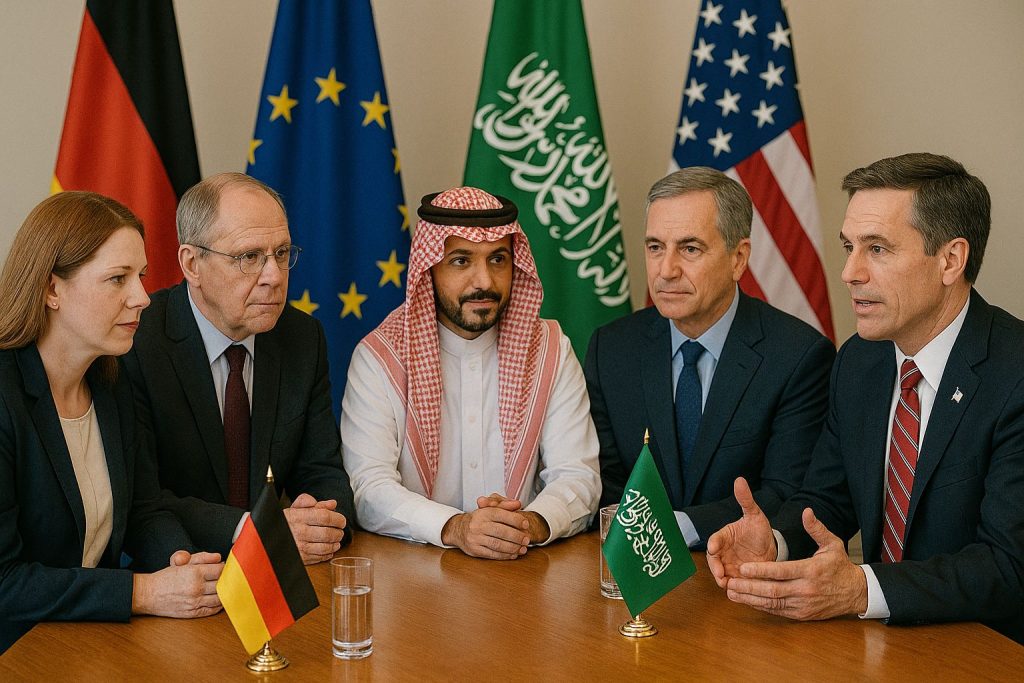
Diplomacy Is The Better Option for Success
The “special relationship” between the United Kingdom and the United States has often been portrayed as one of inevitability—two nations bound by history, language, and common sacrifice. Yet in an era of geopolitical volatility and shifting alliances, it is clear that relationships cannot be taken for granted. They must be renewed, nurtured, and re-defined to remain relevant.
Diplomacy, rather than rhetoric or military posturing, offers the most credible route to strengthening the Anglo-American bond. If managed with creativity and seriousness, diplomacy can transform long-standing partnership into genuine twenty-first century collaboration.
—
The Academic Lens: Trust, Institutions, and Interdependence
Political scientists frequently speak of “institutional trust”—the idea that alliances succeed not simply because of shared interests but because states build dependable mechanisms for cooperation. NATO, the Five Eyes intelligence partnership, and transatlantic trade frameworks are all examples of such institutional trust in action.
From a scholarly perspective, Britain’s role in these institutions has often been that of a bridge: translating European concerns to Washington, while reminding Europe of Washington’s priorities. With Brexit, the UK has lost influence inside the European Union, but this may paradoxically make its bilateral relationship with the US more important. Academic analysis suggests the durability of the “special relationship” now depends less on nostalgia and more on Britain’s ability to bring unique value—whether in diplomacy, science, or security.
—
The Journalistic Angle: Opportunities and Risks in Real Time
Observers in Washington and London note that the current moment is precarious. The US looks increasingly towards the Indo-Pacific, while the UK struggles with its domestic economy and regional divisions. Yet both nations face common challenges: cyber security threats, the pressure of migration, climate commitments, and the search for renewed global leadership after years of domestic discontent.
Here lies the journalistic tension: will the UK–US bond deepen or fray? Diplomats know that every summit, every joint press conference, and every trade negotiation sends signals far beyond the headlines. In an age of populism and misinformation, diplomacy is not just about handshakes in gilded halls—it is about persuading publics that the alliance serves them as well as it serves elites.
—
Pathways to a Stronger Relationship
1. Strategic Trade & Technology Cooperation
Britain and America should re-imagine trade not as tariff disputes but as partnerships in artificial intelligence, green energy, and biomedicine. Co-funded research hubs could act as shared national investments rather than competitive ventures.
2. Cultural and Educational Exchange
The Fulbright Program remains one of the crown jewels of soft power. Expanding scholarships, youth exchanges, and collaborative university initiatives can embed the relationship in the lives of ordinary citizens.
3. Global Leadership in Peacebuilding
Joint mediation efforts—from Ukraine to sub-Saharan Africa—could position the UK and US not simply as military backers but as genuine peace brokers. A coordinated emphasis on diplomacy over confrontation would lend credibility to both governments.
4. Climate Commitments as Security Commitments
Climate policy is no longer a matter of moral virtue alone; it is a strategic necessity. Joint UK–US leadership at COP summits, backed by tangible investments, would demonstrate seriousness in tackling the root causes of instability.
—
Conclusion: A Relationship to Re-Imagine
The relationship between the United Kingdom and the United States is not static—it is a living organism that requires care. As academics remind us, institutions matter; as journalists report, perceptions matter just as much. Diplomacy is the bridge between these two realities.
In choosing diplomacy over bluster, the UK and US do more than preserve tradition. They signal to the world that in an era of fragmentation, alliances built on dialogue, trust, and shared responsibility remain the most reliable tools for success.