
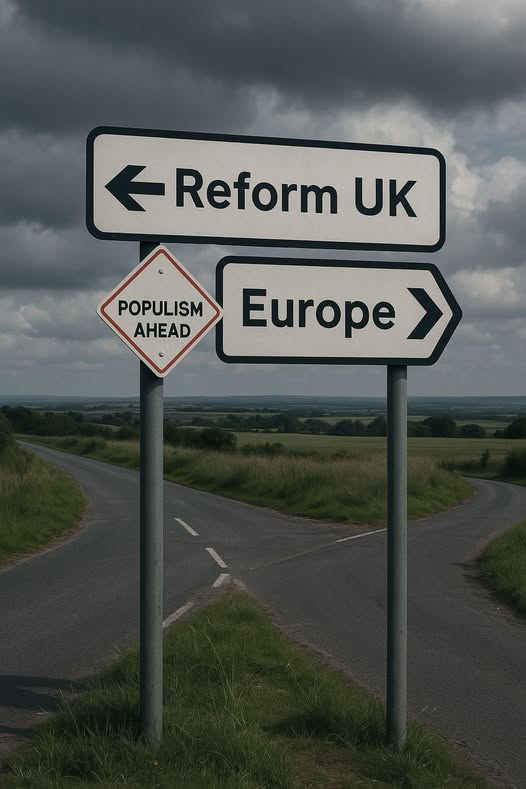
From Brussels Rebel to Prime Ministerial Contender: The Nigel Farage Phenomenon
There was a time when Nigel Farage was seen as little more than a loud voice in the European Parliament — a rebellious MEP who relished in tormenting Brussels bureaucrats and mocking the very institution that paid his salary. Yet, decades later, Farage has achieved what few political outsiders ever do: he has reshaped the national conversation and positioned himself within touching distance of the highest office in the land.
Love him or loathe him, Farage is an intelligent and highly skilled career politician — a man who understands the language of the people far better than most of Westminster’s professional class. His blunt delivery and patriotic fervour resonate with large swathes of the British public who feel alienated, forgotten, and betrayed by the political establishment. His transformation from fringe campaigner to Prime Ministerial candidate is, by any political measure, an extraordinary ascent.
But let’s be clear: a Reform UK government would be a disaster for Britain.
Populism might feel refreshing in an era of bland politics, but policies built on slogans rather than strategy have never produced stability or prosperity. Farage’s talent for capturing discontent is undeniable — yet governing a nation requires more than tapping into anger; it requires solutions that work in a complex, globalised world.
Brexit remains the defining shadow behind it all.
David Cameron’s naivety in calling the referendum without a clear plan for either outcome was one of modern history’s greatest political miscalculations. Boris Johnson’s opportunistic betrayal of the lower middle and working-class voters who placed their faith in him made it worse. The promise of “taking back control” has, for millions, translated into losing opportunity.
Today, without wealth or a foreign passport, the ordinary Briton faces a shrinking horizon. Europe’s borders, once open to workers, students, and small entrepreneurs, have closed. What was sold as sovereignty now feels like isolation.
It is time to face reality. The United Kingdom must re-engage with the European Union. Negotiation — not nostalgia — should define the next chapter. Britain’s place in Europe must be revisited through a second referendum, this time grounded in truth, pragmatism, and a mature understanding of what partnership means in a volatile world.
At the same time, leadership demands balance. The British public expects toughness on crime — not just talk. Violent crime in our cities has spiralled out of control, and empty promises have lost their weight. The nation needs leaders who can walk the walk, restoring safety and safeguarding law-abiding citizens who work hard and live with moral integrity.
Immigration, too, demands nuance. Legal immigration is not a threat — it is a cornerstone of progress. But illegal immigration is a disaster waiting to happen, not just for Britain, but for the free world. Uncontrolled borders breed insecurity, resentment, and tragedy. Helping the developing world means making the third world better — more humane, more prosperous — not merely relocating its populations into already strained systems. Integration must be meaningful, not mechanical.
As Nigel Farage steps into the national spotlight once again, Britain faces a choice between anger and ambition, between isolation and engagement. History has shown us what happens when emotion rules over reason.
The question now is whether Britain will learn from that lesson — or repeat it.
— The Dale Blues Politics Desk