
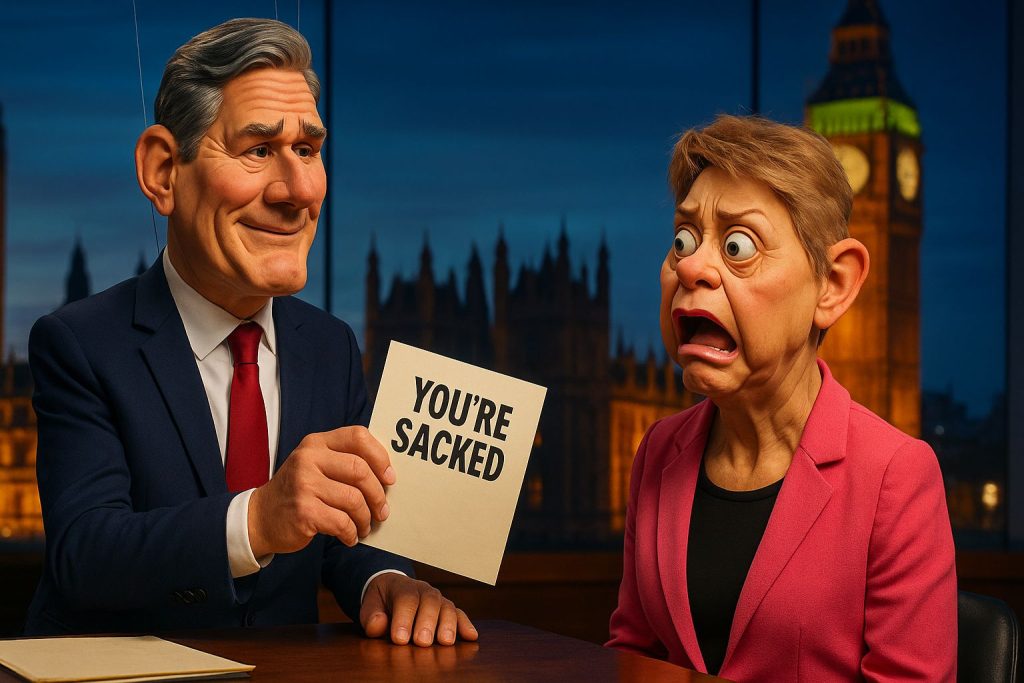
The Foreign Office Is Failing Britain — And Yvette Cooper Must Answer For It
by The Dale Blues Political Desk
Britain’s foreign policy apparatus is fraying at the edges. The Foreign, Commonwealth & Development Office (FCDO) — once a pillar of steady diplomacy and quiet competence — now too often looks like an agency fighting to keep up with crises it should have anticipated, analysed and managed. The consequences are not abstract: they are diplomatic setbacks, abandoned Britons in peril, and strategic vulnerabilities that adversaries are only too happy to exploit.
Recent reporting has exposed a worrying pattern of secrecy, muddled judgement and institutional defensiveness. Journalists revealed the FCDO declined to publish an internal 2024 assessment about the risk of atrocities in Gaza — a decision that raises serious questions about transparency, judgment and whether Britain is properly living up to its responsibilities on the international stage. That’s not bureaucratic hair-splitting; it’s a failure to be candid with Parliament and the public about potential mass-violence risks.
The problem goes beyond one withheld file. The FCDO has come in for stinging criticism for how it handles British nationals detained overseas — cases in which ministers and officials have been accused of being slow to intervene, of missing signs of mistreatment, and of offering a poor standard of consular support when lives and liberty were on the line. That is exactly the sort of failure that corrodes public trust and damages Britain’s reputation for standing up for its citizens abroad.
Into that fraught landscape steps Yvette Cooper — a veteran figure of Westminster who now occupies one of the most sensitive national security portfolios. Ms Cooper’s experience is not in question; what is in question is whether ministers at the top of government have the capacity and the urgency to reform institutions that are showing cracks. When a department repeatedly finds itself on defensive footing rather than leading with clarity, it is legitimate — and necessary — to demand answers. The public deserves ministers who do more than posture: they must demonstrate reform plans, clearer risk assessments, and an appetite for institutional change.
The Home and Foreign Offices’ recent policy moves — from new proscription measures to dramatic rhetoric about borders and state-linked threats — show how national security debates are being reshaped. Some policies are aimed squarely at real and evolving threats such as state-backed malign activity and organised crime; others risk trading strategic soft power for blunt instruments that may undermine British influence overseas. Ministers must explain how these moves balance security with long-term diplomatic capital.
So what should happen now? First: transparency. The FCDO must publish or lay before Parliament critical risk assessments, or explain in forensic detail why it will not. If departments withhold analysis without a compelling, evidence-based reason, that’s a democratic problem. Second: a formal, independent review of consular practice and crisis response — one with teeth and timelines for reform. Third: ministers must be pushed to present a coherent strategic doctrine showing how diplomacy, defence and development tools will be aligned to prevent gaps that adversaries can exploit. Recent academic and media commentaries have made clear the scope for reform in aid, diplomacy and conflict prevention — the time to act is now.
Finally, let’s be plain about political accountability. Yvette Cooper carries ultimate ministerial responsibility for the conduct of policies under her remit. That means questions of competence, judgement and effectiveness are proper subjects for public debate and parliamentary scrutiny. But accountability in a democracy means answers and corrective steps — not invective. If the public is to have confidence in its foreign policy, Ministers must be made to answer in detail, and where failures are found, concrete remedies and personnel decisions should follow.
Britain deserves a Foreign Office that behaves like an instrument of national strength: clear, responsive, courageous and willing to admit error. The present moment is not about theatrics or personal vilification; it is about ensuring our institutions can actually keep Britons safe, defend national interests, and project values abroad. If the FCDO and its political leadership are unwilling or unable to meet that standard, the democratic process must deliver replacement, reform and renewed oversight — quickly.