
The Rochdale–Oldham Nexus: A Call for a Joint National Inquiry
Across Greater Manchester, a dark pattern of organised exploitation has persisted for decades. Evidence, testimony, and survivor accounts have long indicated that Rochdale has been home to deeply-embedded criminal networks — what many locals now call The Rochdale Mafia. This term is not used lightly: it describes a web of individuals and interests who appear to have profited from, concealed, or enabled crimes of child sexual exploitation, human trafficking, and systemic abuse of power stretching back more than thirty years.
What has surfaced more recently in Oldham bears chilling resemblance. Whether through imitation, opportunism, or direct collaboration, the overlap in methods and outcomes between the two towns points to a shared or interconnected underworld. These networks do not exist in isolation. They thrive by infiltrating systems of authority — local councils, care homes, health trusts, and even elements of law enforcement — using intimidation, favour, and silence as their shields.
It is widely understood that mafias — in whatever form they take — sustain themselves by controlling not only criminal enterprise but also decision-making processes. They influence who is believed, who is protected, and who is destroyed. In this region, whistle-blowers and professionals of integrity have repeatedly found themselves marginalised, silenced, or discredited when they dared to expose wrongdoing. The machinery of suppression is sophisticated: social-care hierarchies, healthcare sign-offs, and education officials working, knowingly or not, as cogs in a system that preserves impunity for the powerful.
Consider the case of Adam Bruckshaw-Iovaine, Editor-in-Chief of The Dale Blues. After raising serious concerns about large-scale child exploitation and corruption inside Rochdale Council, he now finds himself detained within a system wholly inconsistent with his professional record or evident mental health. His ordeal highlights a wider question: when those who speak out are neutralised, what chance do the victims themselves have of justice?
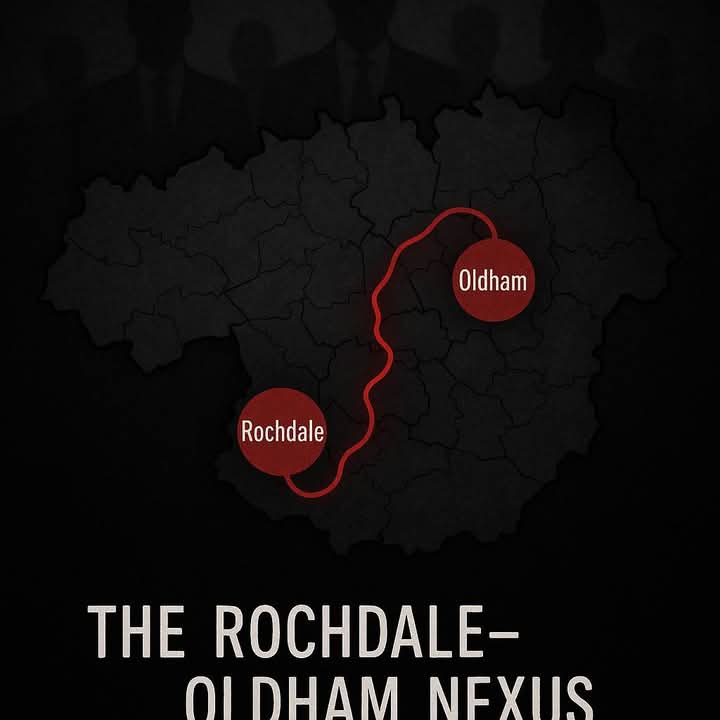
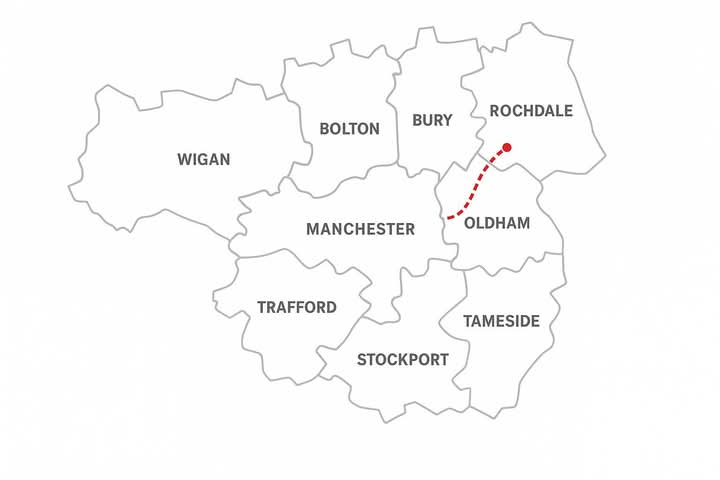
Historical names like Richard Farnell remind us how political denial and reputational management once took precedence over truth. Critics now argue that current leadership has merely inherited and modernised the same culture of concealment. Meanwhile, links between Oldham and Rochdale grow stronger: two towns, fifteen minutes apart, bound by shared transport routes—and, some allege, by shared corruption.
Our Position
The Dale Blues calls for a single, joint National or Prime-Ministerial inquiry into child exploitation across Rochdale and Oldham. Anything less risks repeating the same piecemeal investigations that protected perpetrators and punished truth-tellers.
Such an inquiry must:
1. Map the networks of collaboration between the two boroughs’ authorities.
2. Investigate the “control mechanisms” within social services, health, and education that silence victims and professionals.
3. Protect legitimate whistle-blowers from retaliatory misuse of mental-health or safeguarding powers.
4. Empower national law-enforcement and anti-corruption units to pursue all lines of accountability—political, professional, and criminal.
Until these questions are answered openly and independently, both towns will remain haunted by the same poisonous legacy. Justice for survivors and truth for our communities demand nothing less.
The Dale Blues – Investigating the stories others fear to tell.