
What Lies Beneath Rochdale?

By Adam Bruckshaw-Iovaine, Editor-in-Chief, The Dale Blues
International Independent Voice in Football & Society
Introduction: A Town Draped in Stone and Silence
Rochdale is a place that looks, on the surface, as though it remembers who it once was. Its Town Hall rises like a northern cathedral to industry and pride, an architectural hymn to the nineteenth century’s spirit of craftsmanship. Politicians and developers call it “the jewel of the borough.” It is — but only in the way a mask can be beautiful.
Beneath that stone façade, another Rochdale lives — one that speaks in whispers of cover-ups, coercion, and quiet decay. The official story tells of progress, partnership, and regeneration; the lived experience tells of fear, failure, and a civic culture that has forgotten accountability.
1. From Town Hall to Riverside: The Mirage of Progress
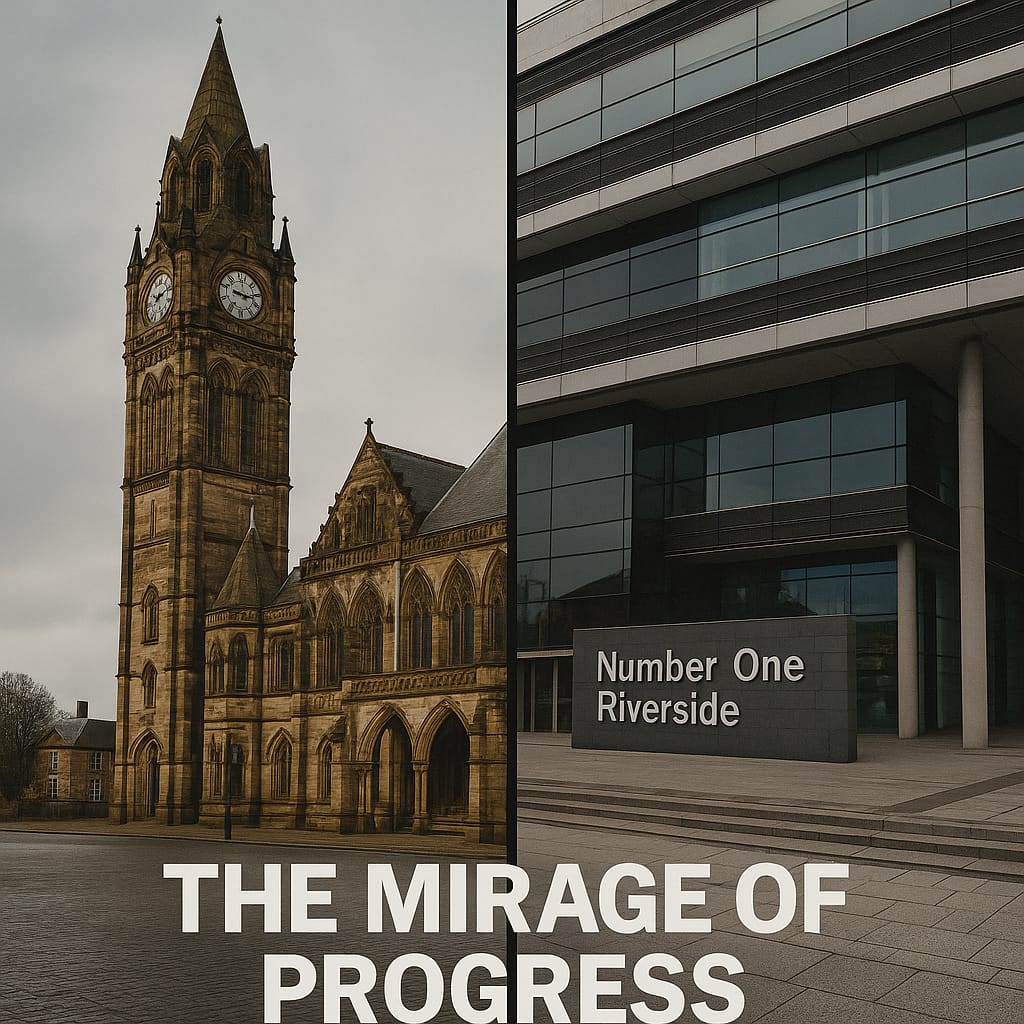
When Rochdale Council shifted its operations to Number One Riverside, the move was framed as a leap into the modern era — glass, chrome, and open-plan governance. Yet the relocation also symbolised something deeper: the replacement of public character with corporate control.
Town Hall’s grandeur has become a backdrop for photo opportunities, weddings, and PR events. Riverside, by contrast, functions as the citadel — a place where decisions are made behind tinted glass and polite euphemisms. Ask an ordinary resident how much “progress” they’ve seen in daily life, and you’ll hear about potholes, public neglect, and the invisible walls between council and community.
The Town Hall was once the people’s palace. Today it is a museum.
2. Public Money, Private Agendas
Follow the paper trail and you find a familiar story: regeneration funds redirected through opaque partnerships; “social care providers” operating under thin accountability; NHS trusts outsourcing mental-health services to private firms whose profits grow as public confidence falls.
Millions have been spent on marketing slogans about “Rochdale rising,” yet the lived reality for many is one of managed decline. Residents speak of services that vanish overnight, complaints ignored, and outcomes that seem predetermined long before the meetings take place.
There is no shortage of strategy documents. What is missing is integrity.
3. Broken Systems, Silenced Voices
Over the years, brave individuals — nurses, carers, patients, and community advocates — have raised the alarm about neglect within local health and social systems. Too often they have been dismissed, discredited, or driven out.
One former patient described Hollingworth Ward at Birch Hill Hospital as “a place where dignity goes to die.” Another spoke of being medicated without consent under the pretext of “care.” Families seeking answers encounter a wall of jargon and delay, while those responsible move seamlessly between agencies, each blaming the other.
Whistleblowers, when they appear, are treated not as protectors of truth but as irritants to be neutralised. In Rochdale, accountability has become a revolving door.
4. A History of Controversy and Cover-Ups
Rochdale’s civic record is not short on scandal. From the child-protection failures that shamed a generation to the persistent mishandling of vulnerable adults, the pattern is unmistakable: public trust erodes, inquiries are promised, and lessons are declared “learned.” Yet the same machinery keeps grinding, unchanged in method, unrepentant in tone.
The town’s leaders seem to believe that if they commission enough “reviews,” the moral ledger resets itself. It does not. The stain remains, embedded in the institutional fabric like smoke in the stone.
5. The Psychology of a Town Under Control
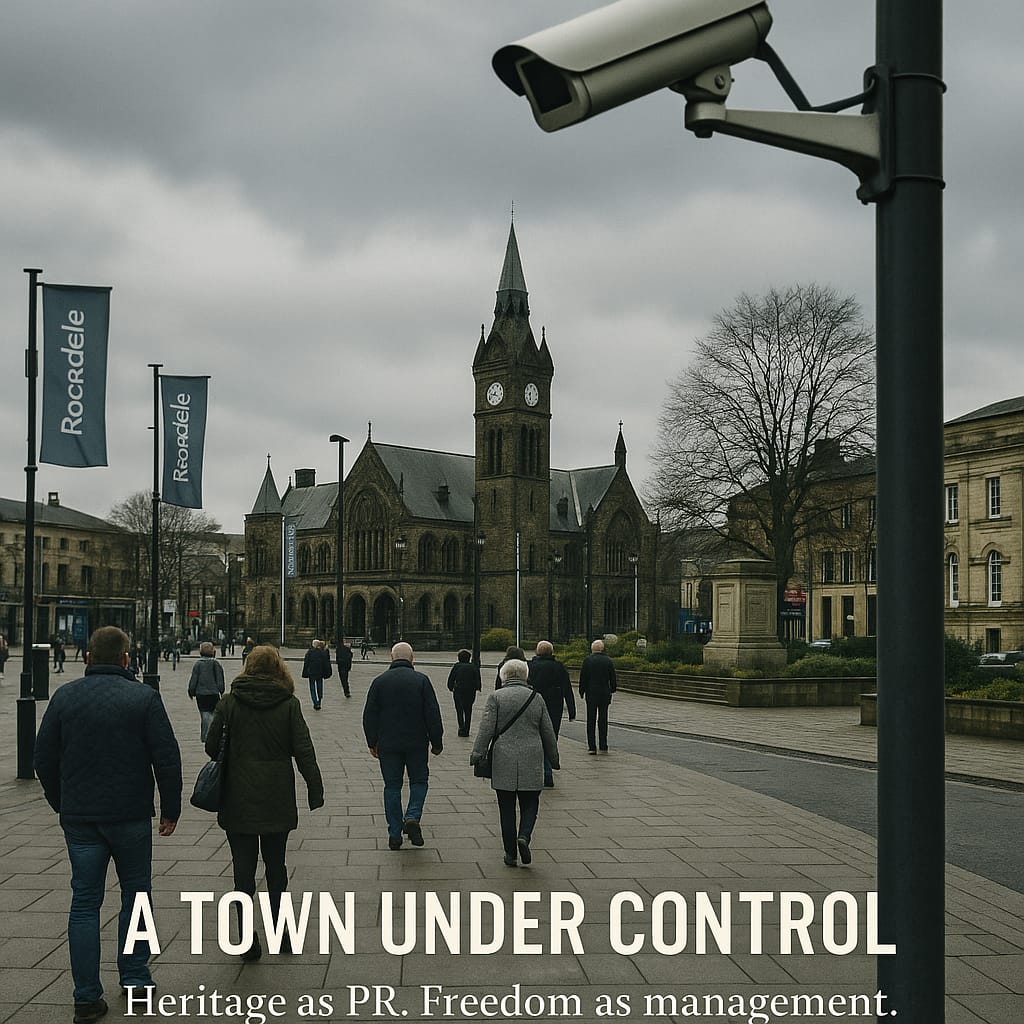
Spend time in Rochdale and you sense a strange contradiction. The people are warm, witty, and resilient — but there’s also a quiet fatalism, a learned helplessness born from decades of being spoken for rather than listened to.
Civic pride is marketed through festivals and slogans, yet many residents describe feeling controlled by unseen bureaucracies. The language of “community partnership” often masks a system of dependency: you must play along, or you disappear from the conversation altogether.
Heritage has become PR. The Town Hall, once a monument to working-class self-determination, now serves as a stage set for the illusion of civic virtue.
6. Hope and Reclamation
And yet, beneath it all, Rochdale’s heart still beats. It lives in the volunteers who coach youth football in the rain, in the mothers who form support networks when services collapse, and in the small local businesses that persevere without favour or funding.
These are the true custodians of the town’s soul — ordinary people who, without press release or budget line, keep Rochdale alive through simple acts of decency and endurance.
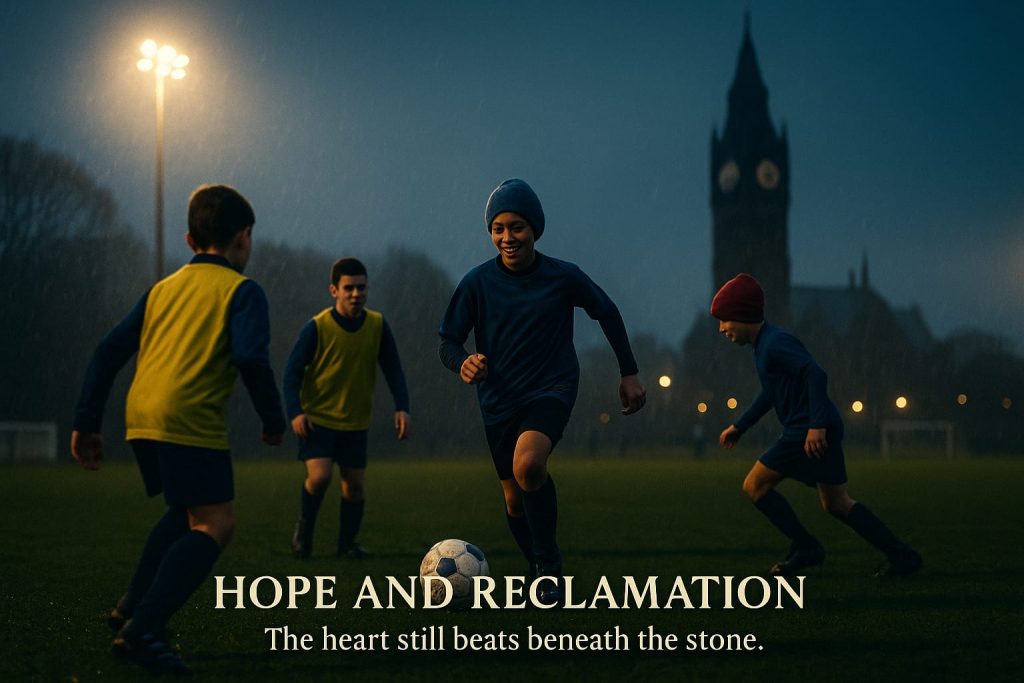
If there is to be any redemption, it will not come from another “strategic plan.” It will come from honesty. From courage. From citizens who refuse to accept that decay is destiny.
Conclusion: Beneath the Stone
The river that gave Rochdale its name runs quietly beneath the streets, hidden but still flowing. It is the perfect metaphor for the truth of this town: buried, contained, but unstoppable.
When the noise of bureaucracy fades and the slogans peel away, the river remains — carrying with it the memory of what Rochdale was, and the possibility of what it could yet be.
Until then, we at The Dale Blues will continue to ask the question others will not:
What lies beneath Rochdale?