
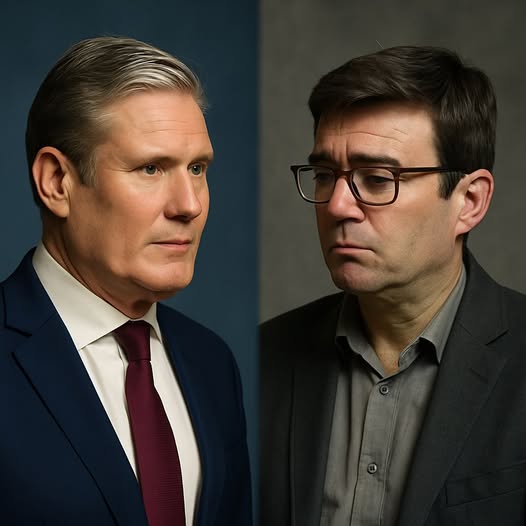
Why Burnham Would Be a Worse Prime Minister than Starmer
By Jonty Hall, Political Correspondent
It is often whispered in the corridors of Rochdale and Manchester town halls that Andy Burnham is a “Prime Minister in waiting.” The so-called King of the North enjoys playing the role of a populist mayor, draped in the garb of everyday man, commuter-champion, and NHS loyalist. But strip away the well-rehearsed soundbites, and what remains is a figure who would falter badly if ever elevated to Number 10.
By comparison, Starmer—whatever his shortcomings—offers at least a level of professional steel and national seriousness that Burnham simply cannot match.
1. The Populist’s Mask
Burnham’s career has been defined by chasing applause rather than forging strategy. From his performative standoffs with Westminster during the pandemic, to the endless photo-ops on public transport, Burnham thrives on headlines but offers little substance behind them. His brand is grievance politics—Manchester versus London, the North versus the South—when the task of a Prime Minister is unifying the nation, not deepening its divides.
Starmer, for all accusations of blandness, has worked to rebuild Labour’s credibility with business, international allies, and cautious voters. Burnham’s populism may rile up the disaffected, but it would collapse quickly under the relentless pressures of statecraft.
2. Track Record in Office
As Health Secretary in Gordon Brown’s Cabinet, Burnham presided over key failings—including delayed responses to hospital scandals and lack of accountability in NHS management. His instinct has always been to deflect blame outward. Compare this to Starmer’s time as Director of Public Prosecutions: while not without controversy, he demonstrated an ability to handle a national institution with gravity and resilience.
A Prime Minister must govern, not just posture. Burnham has never shown an appetite for detail, only the instinct for a headline.
3. The Problem of Credibility
Prime Ministers must be able to command respect on the international stage. Would allies in Washington, Berlin, or Brussels take Burnham seriously? His record suggests not. He has been a regional mayor at best, a back-bencher at worst, and carries no real diplomatic weight.
Starmer, though uncharismatic, exudes the lawyer’s clarity and the careful gravitas required to negotiate treaties, alliances, and crises. Britain cannot afford a Prime Minister who looks parochial the moment he steps outside Manchester Piccadilly.
4. A Leader for the Times?
Britain’s challenges are profound: rebuilding the economy, securing energy resilience, balancing security with liberty, and re-establishing the country’s battered reputation abroad. Burnham speaks a lot about buses and fairness—worthy causes, but hardly the compass points of national leadership.
Starmer at least has sketched a framework of stability and cautious pragmatism. It may not excite the crowds, but at a time of global turbulence, steadiness is preferable to theatrics.
Conclusion: The Wrong Man for the Top Job
Andy Burnham has cultivated his “ordinary bloke made good” persona with relentless discipline. But leadership of a borough is not leadership of a nation. His instinct for populism, his thin track record, and his lack of global credibility all combine to suggest that if he were ever Prime Minister, the country would drift badly—backward, not forward.
Say what you like about Keir Starmer’s lack of spark, but better dull competence than dangerous showmanship.
For the health of the nation, Andy Burnham should stay in Manchester. Britain deserves more than a regional populist in Number 10.
— Jonty Hall, The Dale Blues