
By M. B. Shaw, J. Booth Hall & The Dale Blues Sports Desk
Carlisle United: A Flash at the Top, Deep Roots in Cumbria
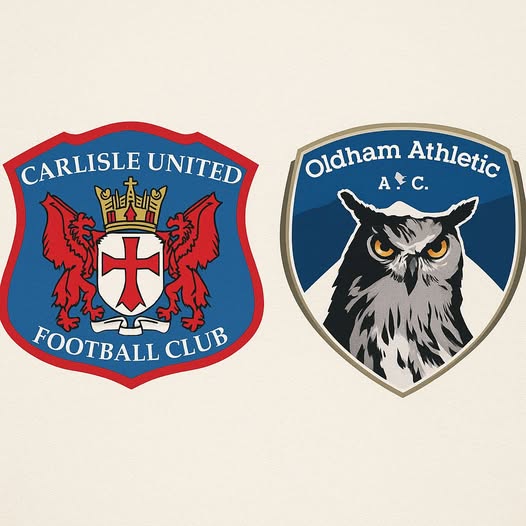
Carlisle United—nicknamed the “Blues” or the “Cumbrians”—was founded in 1904, and Brunton Park has been their home since 1909.
Their early decades were modest: playing in regional leagues, then elected into the Football League in 1928, spending many years in the lower divisions.
The high-water mark came in the 1973–74 season, when under manager Alan Ashman Carlisle won promotion to the First Division (then the top tier) for the first time. In the following 1974–75 season, they made an electrifying start: three straight wins saw them top the First Division table briefly. But, like many clubs making the step up, maintaining the level proved difficult. Carlisle were relegated at the end of that season.
Since then, Carlisle have oscillated between the lower divisions (League One, League Two), with occasional promotions and demotions. Their 1960s promotions under Ashman are notable, as are cup runs, but the First Division experience remains singular in their history.
As of the 2023‑24 season, they suffered relegation from League One to League Two, so the task of rebuilding is again upon them.
Oldham Athletic: Premiership Dreams, Heartbreaks & Rebuilding
Oldham Athletic (the “Latics”), founded in 1895 (originally as Pine Villa) , have a longer history in the upper echelons, though never quite as long-lived at the very top as some. Their early years included spells in Division One (the pre‑Premier League top flight), with their highest finish being runners‑up in the First Division in 1914‑15.
They swung back and forth among the divisions through the mid‑20th century, but the biggest modern era came with Joe Royle. Under Royle, Oldham won the Second Division in 1990‑91, returning to the top flight for the first time since the early 1920s.
Oldham were among the founding members of the Premier League in 1992‑93. Their survival that first season was dramatic—they avoided relegation by goal difference. But the following season (1993‑94) saw them relegated. After that, they had brief periods of competitiveness, but the club increasingly struggled. Financial instability, relegations, and management upheavals followed.
In more recent times, Oldham dropped from League Two in 2022 to the National League, the first former Premier League club ever to fall out of the Football League into non‑league. But in the 2024‑25 season, Oldham secured promotion via the play‑offs back to League Two.
Common Threads: Glory Fades, but Hope Doesn’t
Both clubs have achieved the dream of reaching the top flight—Carlisle briefly in First Division; Oldham more sustained under Royle—and have many proud moments: cup runs, outstanding players, devoted fanbases, and the sense that, with the right stewardship, things might turn around.
Both have also suffered: financial constraints, relegations, instability. Both have grounds with history: Brunton Park, Boundary Park—their towns and fans tend to be underrepresented in the grand narratives of English football, but the passion is there, deep rooted, ready to be reignited.
Looking Ahead: Predictions for Carlisle & Oldham
Here, then, is how I, M. B. Shaw, backed by the Dale Blues desk, believe both clubs might rise in the coming years—and how Brunton Park and Boundary Park might again host serious northern football glory.
Club Key Foundations Required for Rise Short‑Term Prospects (2‑5 years) Long‑Term Ambitions (5‑10 years)
Carlisle United Investment in youth / scouting; stabilisation in League Two/One; improved infrastructure & revenue streams (sponsorship, facilities); retaining core players; strong management. Promotion to League One is feasible if the club avoids the pitfalls of instability. A push for top half finishes in League One within 3‑4 seasons. Growth in fanbase and stronger cup runs to build profile. Establishing themselves firmly in the Championship (second tier). Perhaps making another bid for the top flight—though more realistic as sustained competitiveness in Championship, with a view to Premier League via gradual investment rather than a sudden rise. Brunton Park (or any redevelopment) becoming a ground that meets Championship or better standards and becomes a fortress.
Oldham Athletic Continued strong governance under the current ownership; rebuilding culture and community connection; prudent financial management; bringing in leadership with experience of promotions; reinvestment in academy; stabilising in League Two initially. In the next 2‑3 seasons, solid mid‑table in League Two, pushing for play‑offs. Strong home form at Boundary Park, increased attendances, better off‑pitch revenue. Cup runs that galvanize support & attract investment. After that, a push into League One, then perhaps a sustainable run there. Longer‑term (5‑10 years), Oldham could become a member of the Championship again. If all aligns—investment, infrastructure, consistent performances—a return towards the top‑flight (with due respect to the huge gulf in resources) is not out of reach. Boundary Park revitalised, perhaps with stadium improvements or expansion in facilities, becoming a competitive venue attracting bigger matches and players.
Brunton Park vs Boundary Park: Rivalry of Place, Potential of Regions
The rivalry is not just between clubs; it is between two communities, two grounds filled with memories of better times, two fanbases longing for resurgence. Brunton Park and Boundary Park have their own identities:
Brunton Park: in a city with less competition for attention, deeply embedded in Cumbria, but with challenges: infrastructure, funding, promotion tools.
Boundary Park: historically stronger commercial pull (Greater Manchester), a richer recent history in higher divisions; but also more exposure to the pressures and pitfalls of ownership issues, debt, falling attendances when on the slide.
If Carlisle can harness the unity of their Cumbrian support and turn Brunton Park into both a fortress and a revenue generator (improving amenities, matchday experience, community programs), they can punch above their weight.
If Oldham can maintain stability, rebuild trust with the community, and modernize Boundary Park’s operations, they have a larger regional population and more visibility to leverage.
Final Word: Glory is Possible—But It Demands Patience & Vision
I predict that both clubs will enjoy revival. In Carlisle’s case, within the next 5 years they’ll likely be pushing for promotion from League Two, in fact returning to League One and consolidating there. In Oldham’s case, having won the play‑offs to return to the EFL, they will be competitive in League Two, and over 5‑8 years, I see them making League One their regular home, perhaps beyond.
If all goes well, by the end of the decade, it would not surprise me to see Boundary Park and Brunton Park both hosting squads in the second tier (Championship) with aspirations (if not yet capability) to test the Premier League’s lower reaches—perhaps via cup upsets, or via dramatic promotion play‑offs. They may not both reach the top flight in that window, but both will leave the shadows of relegations and non‑league behind.
So there it is: Carlisle United and Oldham Athletic — storied past, troubled journey, but the anatomy of revival is there. If clubs, supporters, and local backers work together, the North West may once again see Brunton Park vs Boundary Park meaningful up in the higher echelons. Glory is not just a memory; it’s a target.
Carlisle United & Oldham Athletic: Traditions of Glory, Paths to Revival
By M. B. Shaw, J. Booth Hall & The Dale Blues Sports Desk
Carlisle United: A Flash at the Top, Deep Roots in Cumbria
Carlisle United—nicknamed the “Blues” or the “Cumbrians”—was founded in 1904, and Brunton Park has been their home since 1909.
Their early decades were modest: playing in regional leagues, then elected into the Football League in 1928, spending many years in the lower divisions.
The high-water mark came in the 1973–74 season, when under manager Alan Ashman Carlisle won promotion to the First Division (then the top tier) for the first time. In the following 1974–75 season, they made an electrifying start: three straight wins saw them top the First Division table briefly. But, like many clubs making the step up, maintaining the level proved difficult. Carlisle were relegated at the end of that season.
Since then, Carlisle have oscillated between the lower divisions (League One, League Two), with occasional promotions and demotions. Their 1960s promotions under Ashman are notable, as are cup runs, but the First Division experience remains singular in their history.
As of the 2023‑24 season, they suffered relegation from League One to League Two, so the task of rebuilding is again upon them.
Oldham Athletic: Premiership Dreams, Heartbreaks & Rebuilding
Oldham Athletic (the “Latics”), founded in 1895 (originally as Pine Villa) , have a longer history in the upper echelons, though never quite as long-lived at the very top as some. Their early years included spells in Division One (the pre‑Premier League top flight), with their highest finish being runners‑up in the First Division in 1914‑15.
They swung back and forth among the divisions through the mid‑20th century, but the biggest modern era came with Joe Royle. Under Royle, Oldham won the Second Division in 1990‑91, returning to the top flight for the first time since the early 1920s.
Oldham were among the founding members of the Premier League in 1992‑93. Their survival that first season was dramatic—they avoided relegation by goal difference. But the following season (1993‑94) saw them relegated. After that, they had brief periods of competitiveness, but the club increasingly struggled. Financial instability, relegations, and management upheavals followed.
In more recent times, Oldham dropped from League Two in 2022 to the National League, the first former Premier League club ever to fall out of the Football League into non‑league. But in the 2024‑25 season, Oldham secured promotion via the play‑offs back to League Two.
Common Threads: Glory Fades, but Hope Doesn’t
Both clubs have achieved the dream of reaching the top flight—Carlisle briefly in First Division; Oldham more sustained under Royle—and have many proud moments: cup runs, outstanding players, devoted fanbases, and the sense that, with the right stewardship, things might turn around.
Both have also suffered: financial constraints, relegations, instability. Both have grounds with history: Brunton Park, Boundary Park—their towns and fans tend to be underrepresented in the grand narratives of English football, but the passion is there, deep rooted, ready to be reignited.
Looking Ahead: Predictions for Carlisle & Oldham
Here, then, is how I, M. B. Shaw, backed by the Dale Blues desk, believe both clubs might rise in the coming years—and how Brunton Park and Boundary Park might again host serious northern football glory.
Club Key Foundations Required for Rise Short‑Term Prospects (2‑5 years) Long‑Term Ambitions (5‑10 years)
Carlisle United Investment in youth / scouting; stabilisation in League Two/One; improved infrastructure & revenue streams (sponsorship, facilities); retaining core players; strong management. Promotion to League One is feasible if the club avoids the pitfalls of instability. A push for top half finishes in League One within 3‑4 seasons. Growth in fanbase and stronger cup runs to build profile. Establishing themselves firmly in the Championship (second tier). Perhaps making another bid for the top flight—though more realistic as sustained competitiveness in Championship, with a view to Premier League via gradual investment rather than a sudden rise. Brunton Park (or any redevelopment) becoming a ground that meets Championship or better standards and becomes a fortress.
Oldham Athletic Continued strong governance under the current ownership; rebuilding culture and community connection; prudent financial management; bringing in leadership with experience of promotions; reinvestment in academy; stabilising in League Two initially. In the next 2‑3 seasons, solid mid‑table in League Two, pushing for play‑offs. Strong home form at Boundary Park, increased attendances, better off‑pitch revenue. Cup runs that galvanize support & attract investment. After that, a push into League One, then perhaps a sustainable run there. Longer‑term (5‑10 years), Oldham could become a member of the Championship again. If all aligns—investment, infrastructure, consistent performances—a return towards the top‑flight (with due respect to the huge gulf in resources) is not out of reach. Boundary Park revitalised, perhaps with stadium improvements or expansion in facilities, becoming a competitive venue attracting bigger matches and players.
Brunton Park vs Boundary Park: Rivalry of Place, Potential of Regions
The rivalry is not just between clubs; it is between two communities, two grounds filled with memories of better times, two fanbases longing for resurgence. Brunton Park and Boundary Park have their own identities:
Brunton Park: in a city with less competition for attention, deeply embedded in Cumbria, but with challenges: infrastructure, funding, promotion tools.
Boundary Park: historically stronger commercial pull (Greater Manchester), a richer recent history in higher divisions; but also more exposure to the pressures and pitfalls of ownership issues, debt, falling attendances when on the slide.
If Carlisle can harness the unity of their Cumbrian support and turn Brunton Park into both a fortress and a revenue generator (improving amenities, matchday experience, community programs), they can punch above their weight.
If Oldham can maintain stability, rebuild trust with the community, and modernize Boundary Park’s operations, they have a larger regional population and more visibility to leverage.
Final Word: Glory is Possible—But It Demands Patience & Vision
I predict that both clubs will enjoy revival. In Carlisle’s case, within the next 5 years they’ll likely be pushing for promotion from League Two, in fact returning to League One and consolidating there. In Oldham’s case, having won the play‑offs to return to the EFL, they will be competitive in League Two, and over 5‑8 years, I see them making League One their regular home, perhaps beyond.
If all goes well, by the end of the decade, it would not surprise me to see Boundary Park and Brunton Park both hosting squads in the second tier (Championship) with aspirations (if not yet capability) to test the Premier League’s lower reaches—perhaps via cup upsets, or via dramatic promotion play‑offs. They may not both reach the top flight in that window, but both will leave the shadows of relegations and non‑league behind.
So there it is: Carlisle United and Oldham Athletic — storied past, troubled journey, but the anatomy of revival is there. If clubs, supporters, and local backers work together, the North West may once again see Brunton Park vs Boundary Park meaningful up in the higher echelons. Glory is not just a memory; it’s a target.